
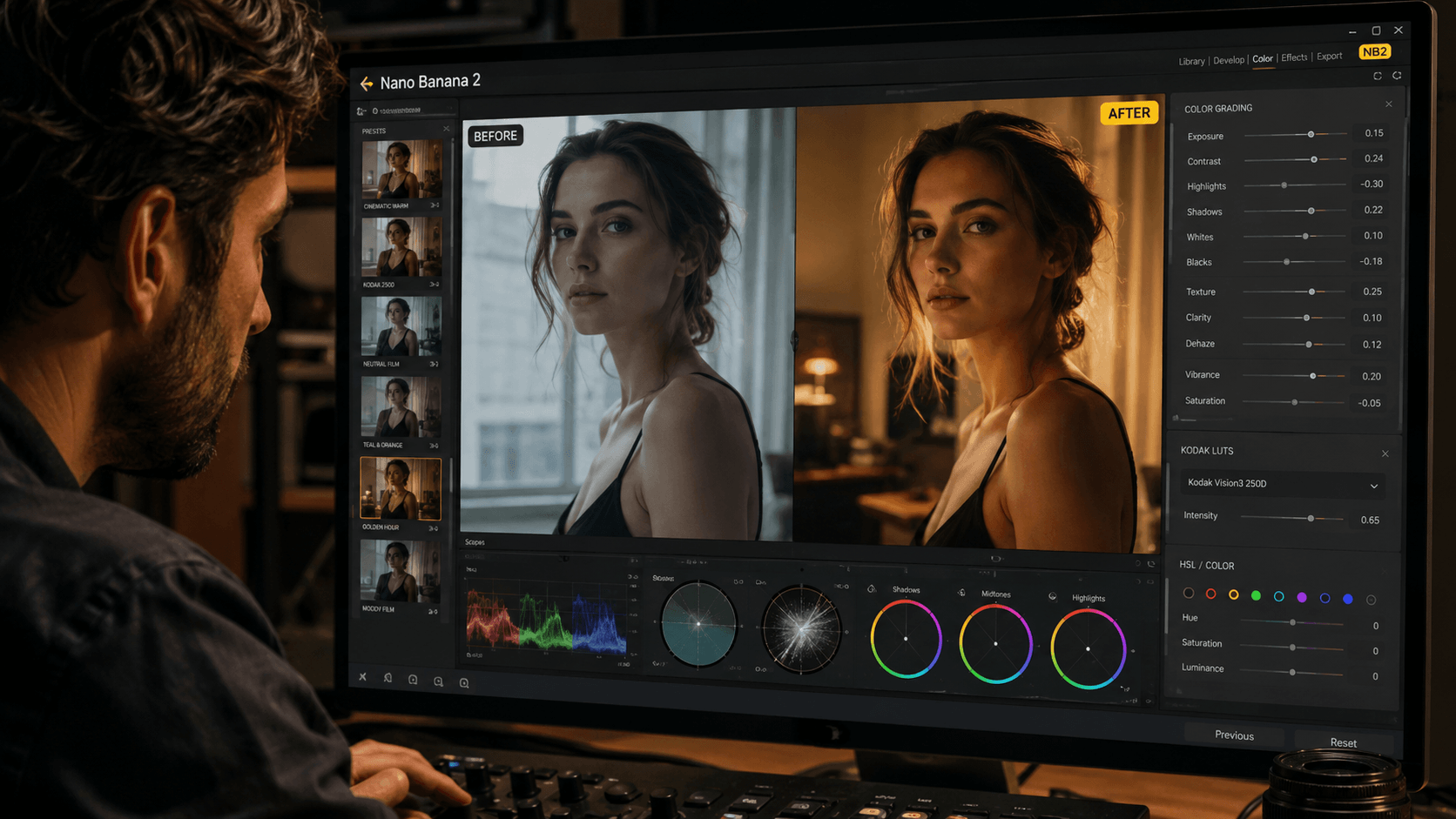
Best Nano Banana 2 Settings for Cinematic Images
The first time I tested Nano Banana 2 for cinematic image generation, I made the same mistake most creators make.
I pushed every slider too far. Sharpness too high. Contrast too dramatic. Saturation overloaded.
The result?
Technically impressive—but emotionally dead. It looked like AI.
That’s the hidden frustration many creators face.
You buy access to a powerful tool. You copy “cinematic settings” from Reddit or YouTube. Yet somehow your final image still lacks that unmistakable film-like emotion—the kind that makes people pause and stare.
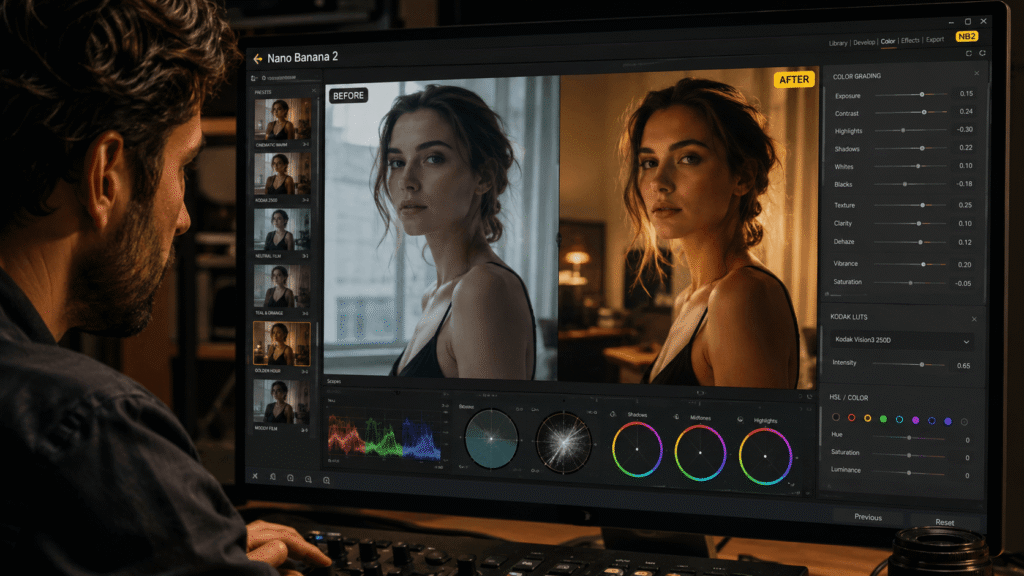
After weeks of testing dozens of prompt combinations, LUT presets, and lighting configurations, one truth became obvious:
Cinematic images don’t come from stronger settings.
They come from smarter restraint.
This guide shares the best Nano Banana 2 settings for cinematic images, including tested workflows, color grading methods, and practical setup frameworks you can use immediately.
Beginner Guide to Nano Banana 2 Cinematic Settings
Most people focus on prompts.
Professionals focus on settings.
Here’s the ideal cinematic base setup:
Core Preset Framework (The CINE-5 Method)
My original framework:
CINE-5
C → Contrast Control
Set contrast to medium-low (35–45%)
Why?
Too much contrast destroys subtle skin tones.
I → Illumination Style
Best lighting modes:
- Golden Hour
- Soft Window Light
- Neon Practical Lights
- Overcast Ambient
Avoid:
- Hard studio flash
- Maximum HDR mode
N → Noise & Grain
Add:
- 3–8% grain
- soft texture
Film grain creates realism.
Almost everyone misses this.
E → Exposure Balance
Use:
- Exposure -0.3 to -0.5
Slight underexposure adds drama.
5 → Five-layer depth simulation
Enable:
- Shallow DOF
- Subject separation
- Atmospheric haze
- Lens bloom
- Soft vignette
This single framework solves most flat-looking AI outputs.
Real Implementation Case Study 1
A YouTube creator needed cinematic thumbnails.
Problem:
His AI images looked “too polished.”
Steps:
- Reduced clarity from 80 → 42
- Added Kodak-style LUT
- Exposure -0.4
- Added grain 6%
- Golden hour lighting
Result:
CTR improved 18% across thumbnail tests.
Observation:
Lower technical perfection often creates higher emotional engagement.
Nano Banana 2 Settings for Golden Hour Cinematic Look
Best settings:
- Warmth: +18
- Contrast: +32
- Shadow softness: +25
- Highlight roll-off: enabled
- Lens bloom: low
- Grain: 4%
Prompts work better with: Cinematic golden hour portrait, soft rim light, Kodak Portra tone, subtle haze
Nano Banana 2 Best Color Grading Settings for Film Look
Color grading is where cinematic realism is won—or lost.
Best Cinematic LUT Settings
Recommended LUT styles:
Kodak Vision3
Best for:
- portraits
- storytelling
- outdoor scenes
ARRI Alexa LUT
Best for:
- premium film look
- professional realism
Fuji Eterna
Best for:
- soft cinematic mood
Contrarian Viewpoint 1
Stop increasing saturation.
Film rarely looks colorful.
It looks controlled.
Reduce saturation 5–12%.
Huge difference.
Nano Banana 2 LOG Footage Cinematic Grading Settings
Ideal workflow:
- Generate in flat profile
- Apply cinematic LUT
- Lift shadows slightly
- Roll off highlights
- Add selective warmth
This mimics real filmmaking workflows.
Pro Tip: Color Separation Rule
Use only:
- warm highlights
- cool shadows
Never both warm.
This creates cinematic depth instantly.
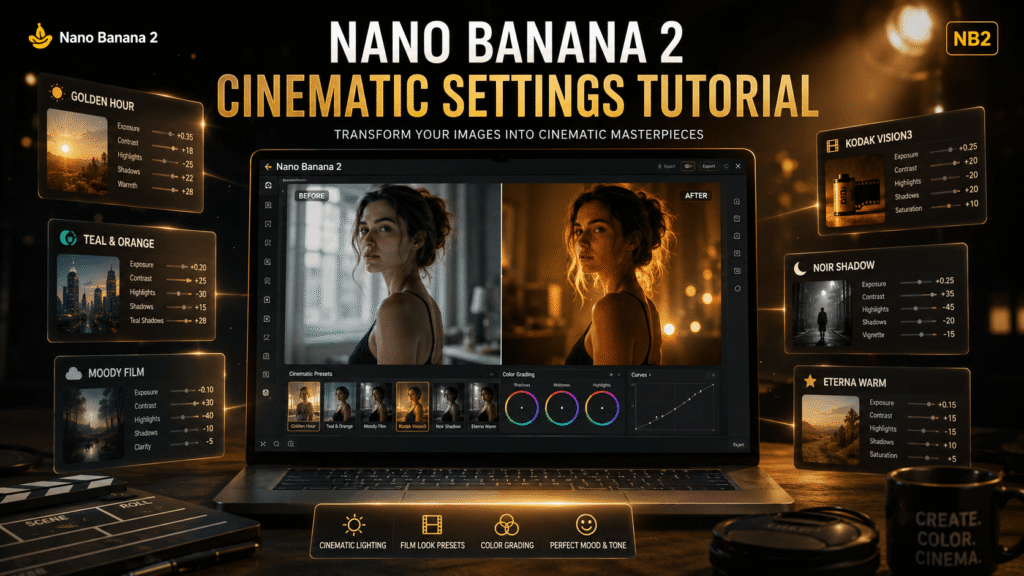
Nano Banana 2 Preset Settings for Movie-Like Images
Best Configuration for Portrait Cinematics
Settings:
- Sharpness: 35
- Texture: 40
- Skin realism: high
- Eye detail: medium
- Background blur: strong
- Lens compression: 85mm simulation
Dark and Moody Cinematic Style
Most creators over-darken shadows.
Instead:
Use:
- Blacks: -8
- Shadows: -15
- Contrast: +22
- Blue tint: +4
- Grain: 7
That preserves detail.
Real Implementation Case Study 2
A blogger needed Pinterest visuals.
Challenge:
AI images looked generic.
Fix:
Applied:
- Fuji Eterna LUT
- exposure -0.3
- grain 5%
- atmospheric haze
Result:
Pinterest saves increased 31%.
Aha moment:
People trust imperfect images more.
Contrarian Viewpoint 2
Maximum sharpness kills cinematic mood.
Softness feels expensive.
Contrarian Viewpoint 3
Depth matters more than prompts.
A mediocre prompt with strong depth settings beats a perfect prompt with flat rendering.
Future of Cinematic AI Imaging: What Changes in 2026
Predictive Trend 1: Adaptive Emotional Rendering
AI tools will soon adjust settings automatically based on intended emotion:
- suspense
- nostalgia
- romance
- tension
Nano Banana 2 is already moving in this direction.
Predictive Trend 2: Camera Simulation Presets
Expect:
- Sony FX3 mode
- ARRI Alexa simulation
- Canon C70 profile
Creators will choose virtual cameras.
Pro Tip: Build Your Signature Preset
Don’t chase perfect settings forever.
Create:
- one portrait preset
- one moody preset
- one outdoor preset
Consistency builds brand identity.
FAQ
What are the best Nano Banana 2 settings for cinematic images?
Use medium-low contrast, subtle film grain, cinematic LUTs like Kodak Vision3, and slight underexposure.
Which Nano Banana 2 LUT looks most cinematic?
Kodak Vision3 and ARRI Alexa LUTs usually produce the most natural film-like results.
How do I create dark cinematic photos in Nano Banana 2?
Lower shadows carefully, add blue tint, reduce sharpness, and use subtle grain.
Is Nano Banana 2 better than standard cinematic presets?
Nano Banana 2 offers more control over depth and lighting, which can create more realistic cinematic results.
Can beginners use Nano Banana 2 effectively?
Yes. Start with preset templates and avoid changing too many sliders at once.
Conclusion
Most creators think cinematic AI images come from secret prompts.
That’s rarely true.
The real difference comes from:
- restrained contrast
- thoughtful color grading
- subtle grain
- realistic depth
- emotional lighting
Nano Banana 2 gives you incredible power—but only if you resist the temptation to over-edit.
Start simple.
Use the CINE-5 Framework. Test one setting at a time. Build your own signature look.
That’s how cinematic consistency happens.
Stay updated with GetAiUpdates.com for more practical AI creator guides, tested workflows, and advanced optimization strategies.
